

Roofing Insights
Roof Drainage for Bellevue, TN Homes
What every west Nashville homeowner should know before storm season
Bellevue sits in the Trace Creek watershed — a drainage system that showed its limits during Nashville's historic flooding. Understanding how your roof sheds water is the first line of defense before any storm season.
Why It Matters in Bellevue
Bellevue TN Roof Drainage: Bellevue’s Drainage Challenge
Bellevue TN Roof Drainage is a question Bellevue, TN property owners ask us often, and this Bellevue TN Roof Drainage guide gives a clear answer. For local context we reference National Weather Service data, and every repair or replacement we make meets GAF manufacturer standards. Nashville’s May 2010 flood — a rainfall event that dropped more than 13 inches in 48 hours and pushed the Cumberland River past 51 feet — highlighted how quickly water backs up across Middle Tennessee’s creek drainages. Bellevue’s Trace Creek watershed was among the areas affected. While that event was exceptional, it illustrates a pattern west Nashville homeowners live with on a smaller scale several times each year: localized storm cells that drop heavy rain faster than the ground and drainage systems can absorb it. For Bellevue property owners, getting Bellevue TN Roof Drainage handled correctly protects both the roof and any insurance claim.
Your roof is the first point in that drainage chain. When it fails to shed water quickly — through clogged gutters, deteriorated valley flashing, or undersized downspouts — water finds paths into soffits, attics, and eventually living spaces before it ever reaches the ground. In Bellevue, that risk is compounded by many neighborhoods’ proximity to creek drainage corridors.
The Four Drainage Points Our crews document Bellevue TN Roof Drainage across Bellevue and the surrounding Middle Tennessee area.
Where Bellevue Roofs Fail First

Most water intrusion in Bellevue homes traces to one of four points:
1. Valleys
Roof valleys concentrate the runoff from two adjacent roof planes into a single channel. They’re the highest-volume drainage point on most homes, and when valley flashing deteriorates — or was installed incorrectly — they become the most common leak source during sustained rain. Signs of valley failure include granule accumulation in gutters, visible rust staining on flashing, and slow drips that start hours after rain stops.
2. Gutters and Downspouts
A clogged or undersized gutter doesn’t drain during heavy rain — it overflows at the fascia, where the water wicks into the rafter tails and soffit. Downspout capacity matters as much as gutter size: a 4-inch downspout handles roughly half the volume of a 3×4-inch rectangular one. In Bellevue, where storms can dump 1–2 inches per hour, undersized downspouts are a common cause of fascia rot that goes undetected for years.
3. Step and Counter Flashing
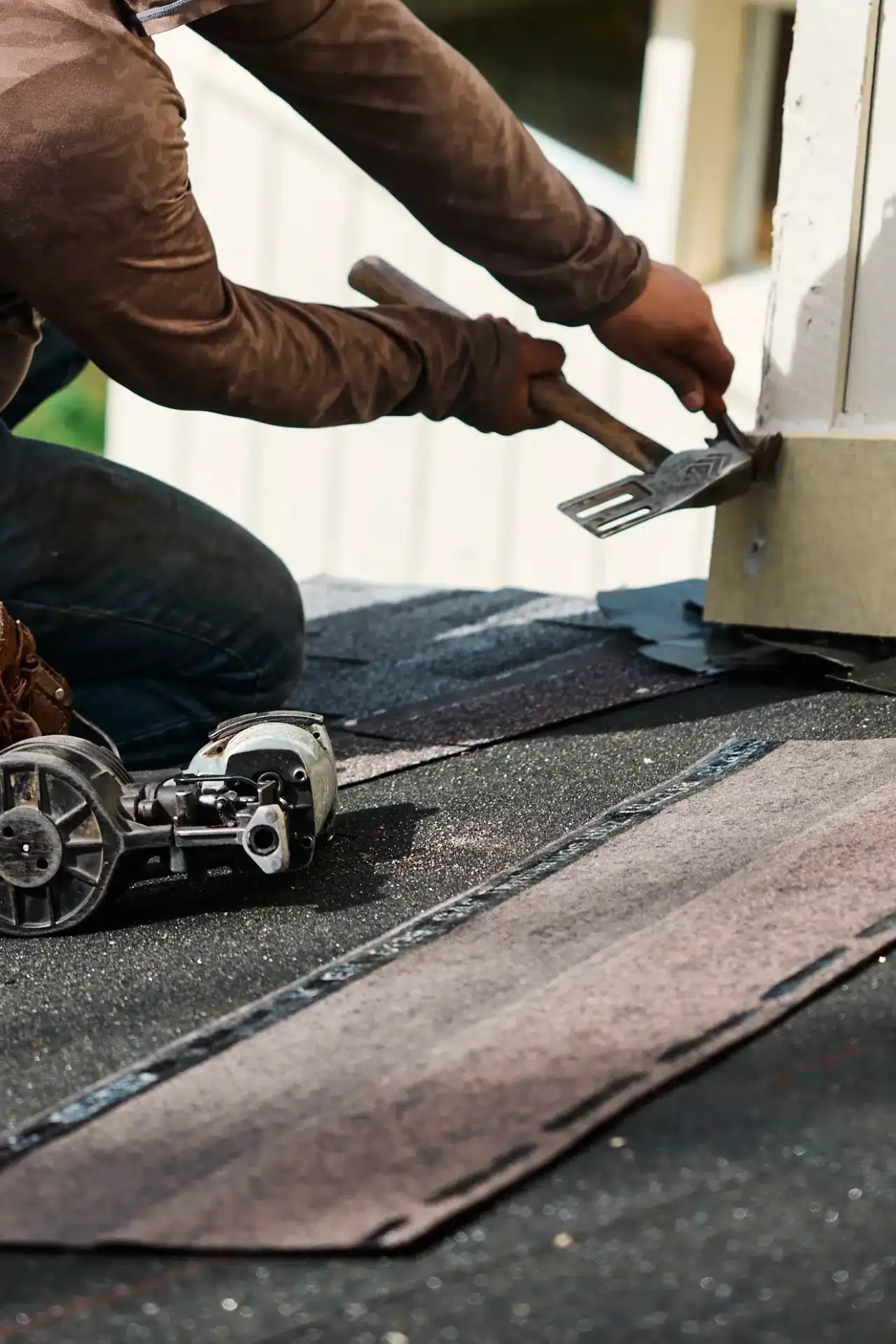
Where the roof meets a vertical surface — a chimney, dormer, or exterior wall — step flashing creates the seal. Older Bellevue homes frequently have flashing that was sealed with caulk rather than properly lapped and counterflashed. Caulk fails, typically within 5–10 years, allowing water to run behind the wall cladding before it ever reaches the interior. The resulting damage often appears as staining at interior wall bases rather than an obvious ceiling leak.
4. Eave and Ice-and-Water Shield Coverage
Ice-and-water shield at the eaves provides a waterproof membrane beneath the shingles that stops driven rain and ice dams from penetrating. Many older Bellevue roofs were installed without adequate eave coverage — or with only felt paper, which is not waterproof. During a storm with significant wind, water can drive under shingle edges and saturate the decking even when the shingles themselves are in good condition.
Before Storm Season
What to Check (or Have Checked) Each Year
- Clear gutters and downspouts — check in late fall after leaf drop and again in spring
- Run a hose at the ridge during calm weather and watch where water pools or backs up
- Look for granule accumulation in gutters after rain — a sign of shingle surface erosion
- Inspect attic after heavy rain for any daylight around penetrations or wet insulation
- Have step and counter flashing inspected every 5–7 years, especially on older homes
- Consider a professional baseline inspection before storm season — see our Bellevue roof inspection service
Water damage found early is a repair. Water damage found after years of slow intrusion is often a partial gut. In Bellevue’s drainage environment, an annual check pays for itself.
Free Inspection
Know Your Drainage Before the Next Storm.
Southern Roofing Co. provides written drainage assessments for Bellevue homeowners — gutters, valleys, flashing, and full system review. Schedule before storm season.