Roofing Insights
Storm Damage Roof Claims in Bellevue, TN
What west Nashville homeowners need to know after hail or wind
Bellevue's position west of Nashville puts it in the path of localized storm cells that can produce hail, high winds, and heavy rain with little warning. This guide covers what to do from the moment the storm passes through the insurance claim and into repair.
After the Storm
Bellevue TN Storm Damage: The First 48 Hours
Bellevue TN Storm Damage is a question Bellevue, TN property owners ask us often, and this Bellevue TN Storm Damage guide gives a clear answer. For local context we reference National Weather Service data, and every repair or replacement we make meets GAF manufacturer standards. West Nashville storm cells are localized — a hail event that dents your neighbor’s gutters may leave yours untouched, or vice versa. That localized pattern can work against you when filing a claim, because an adjuster unfamiliar with the area may assume damage is “spotty” rather than recognizing it as a storm-cell characteristic. Your documentation from the first 48 hours is your best protection against a disputed claim. For Bellevue property owners, getting Bellevue TN Storm Damage handled correctly protects both the roof and any insurance claim.
- Photograph any visible damage from the ground — dented gutters, missing shingles, debris
- Do NOT go on the roof yourself — wait for a professional assessment
- If there is active leaking, place buckets and call for emergency tarp service
- Note the date and time of the storm event — your carrier will ask
- Call a licensed roofing contractor for a documented inspection before contacting your insurance company
The Claim Process
Filing a Davidson County Insurance Claim

Have a roofing contractor inspect first. A documented report — with photographs, measurements, and hail impact mapping — gives your adjuster a complete picture and reduces the chance of a partial denial. Without documentation, adjusters rely on their own inspection, which may happen days or weeks after the event. Our crews document Bellevue TN Storm Damage across Bellevue and the surrounding Middle Tennessee area.
What your inspection report should include
- Date of inspection and reference to the storm event date
- Hail impact count per 10-square-foot test square (carriers use this standard)
- Photographs of each damaged area, labeled by roof section
- Assessment of flashing, gutters, and any secondary water damage
- Written repair or replacement recommendation
ACV vs. RCV policies
Your policy type determines how your claim pays out. An Actual Cash Value (ACV) policy pays the depreciated value of your roof at the time of the storm. A Replacement Cost Value (RCV) policy pays the full cost of replacement, releasing the depreciation holdback after the work is complete. Check your declarations page to confirm which type you carry — this affects how you budget the project and when you receive full payment.
Common Mistakes
What to Avoid After a Storm
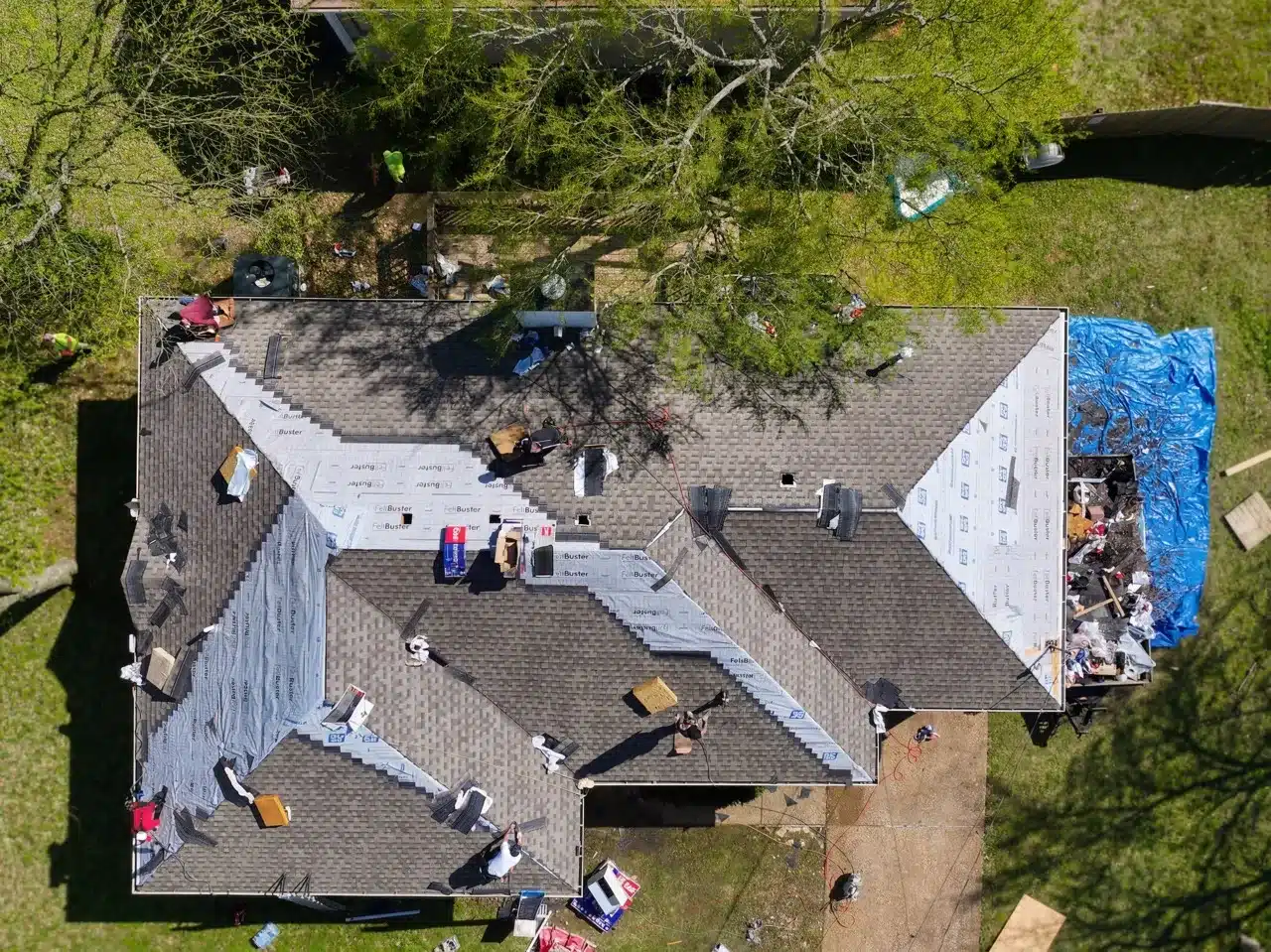
- Waiting too long. Most policies have a reporting window — check your declarations page, as timelines vary by carrier. Delaying may give the carrier grounds to deny on untimely notice.
- Signing a contract before the claim is approved. A reputable contractor will give you a written scope and let you file the claim before signing anything binding.
- Accepting a low estimate without getting a second opinion. If the adjuster’s estimate doesn’t cover a full replacement when one is warranted, a contractor can submit a supplemental claim with additional documentation.
- Ignoring secondary damage. Hail that bruises shingles also dents gutters and can crack flashing. A complete scope includes all storm-related damage, not just the visible shingle impacts.
For Bellevue’s drainage-specific concerns, also read our guide to roof drainage for Bellevue homes — many post-storm leak calls trace to drainage failures exposed by the storm rather than direct storm damage. A documented Bellevue TN Storm Damage assessment is the best protection for Bellevue property owners.
Free Storm Inspection
Storm Damage in Bellevue? Start Here.
Get a documented inspection before you file — Southern Roofing Co. provides the written report your Davidson County adjuster needs and supports the claim from inspection through completion.